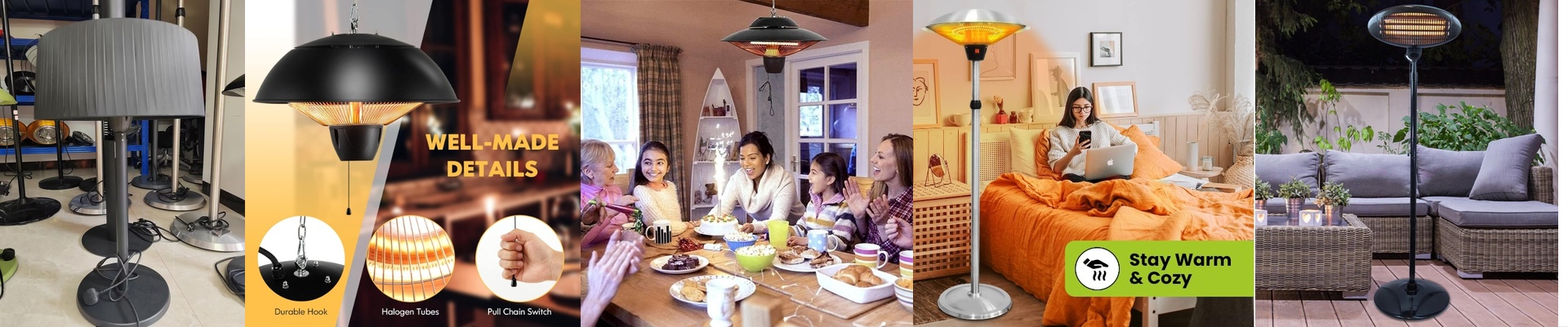


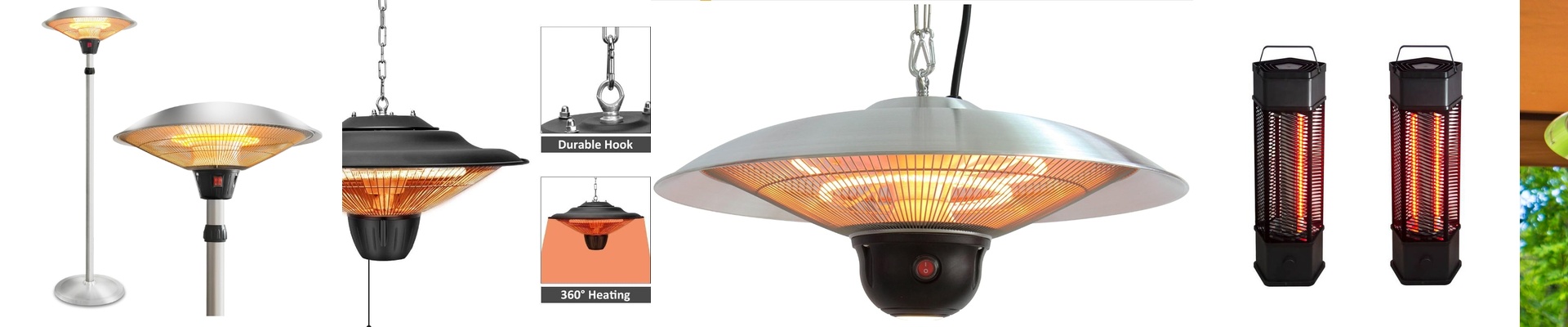

Cold corners and wasted heat have no business on your patio. When you step outside, you want warmth that shows up the second you flip the switch and stays where you are—not lost to the open air. That’s the whole point of infrared heating: it delivers heat straight to people and surfaces, not up into the sky.
What matters under the hood
Infrared electric heaters throw radiant heat outward at the speed of light, warming objects and skin on contact. The payoff is comfort that’s immediate—heat hits the moment the unit is on, with no waiting around for air to start moving. Most of these heaters run on either a carbon fiber element or a quartz tube, and for good reason: both heat up fast and hold a steady output. Most models run on standard household voltage, and the ones that make life easiest come with a built-in thermostat for consistent temperature control. App control isn’t a luxury—it’s genuinely useful. You can pre-heat before you head out, tweak the level from your chair, and set timers so the heater isn’t running all night. For outdoor setups, a solid IP rating keeps rain and dust out, and tip-over protection shuts the unit down if it gets bumped over.
Why it works for outdoor spaces
Outdoor areas are tough to heat because the air keeps moving and the space is wide open. Conventional heating tries to warm the whole volume, so a lot of energy goes where nobody is. Infrared focuses on the zones you actually occupy, so you feel comfortable while using less total energy. That targeted approach cuts out cold spots and makes the space usable sooner—even when the evening breeze picks up.
The practical details that matter
Infrared warmth does its best work when the heater is mounted at a comfortable height and aimed where you actually sit. Clearance to combustible materials matters, so stick to the manufacturer’s clearance specs. And yes, app control is convenient—but Wi-Fi range can be spotty. If your patio is far from the router, a small extender can make the connection reliable.