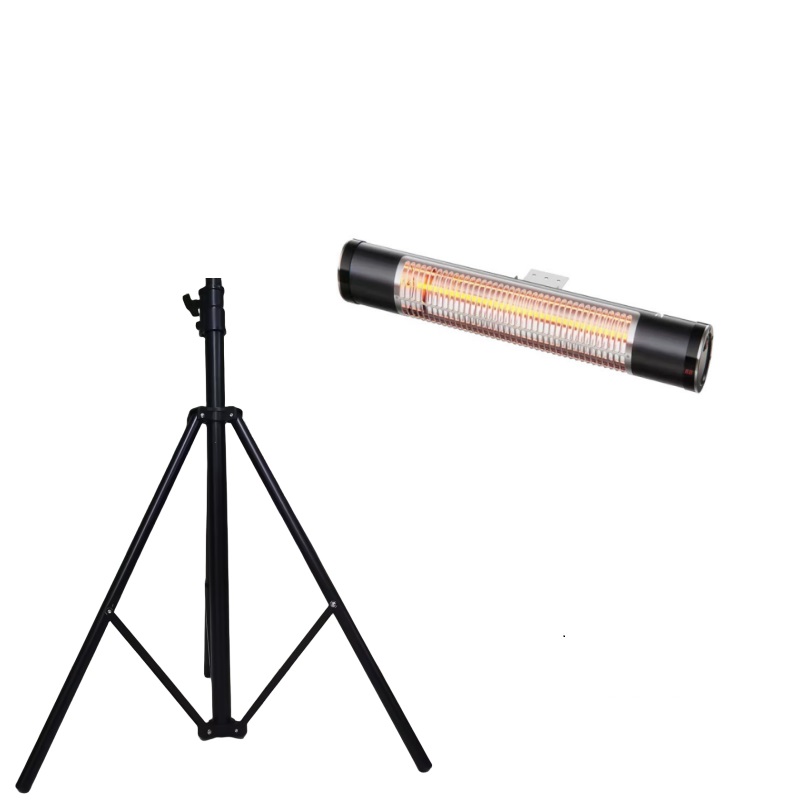
Why We Use Explosion-Proof Quartz in Bathroom Heaters
Think about your bathroom. It’s a place of extremes. One minute it’s freezing, the next it’s a steam room. Now, imagine a heating tube glowing at 800°C. If a stray drop of cold water hits that glass, it doesn’t just crack. It can shatter. That’s a nightmare scenario. Which is exactly why we don’t use standard glass—we use explosion-proof quartz. The deal with thermal shock Quartz is tough, but it’s not bulletproof. When glass cools down too fast, it stresses out. To stop the tube from bursting, we use reinforced blends or a specialized outer sleeve. Think of it like a safety net. If the tube does fail or the pressure spikes, the design keeps the shards locked inside. Instead of glass spraying across your shower floor, everything stays contained. It’s about peace of mind. Instant heat, high stress These heaters use short-wave infrared. They don’t bother warming up the air in the room; they go straight for your skin. It feels amazing—that instant wave of warmth the second you flip the switch. But there’s a catch. To get that speed, we pack a lot of power into a tiny space. The filament hits top temperature in seconds. That’s a massive amount of stress on the glass. Without that explosion-proof rating, the whole thing would be a ticking time bomb of mechanical failure. The trade-off Now, being honest: adding these safety layers does change things a bit. You might lose a tiny bit of raw heat compared to a bare tube. But here’s the thing. I’d rather lose 2% efficiency than have a heater fail catastrophically in a wet zone. It’s a trade I’ll make every single time. Just a heads-up if you’re installing these—make sure your housing can handle the heat. You don’t want to find out the hard way that your plastic mounts are melting.