


Why Your Oven’s Temperature Swings Are Killing Your Bread
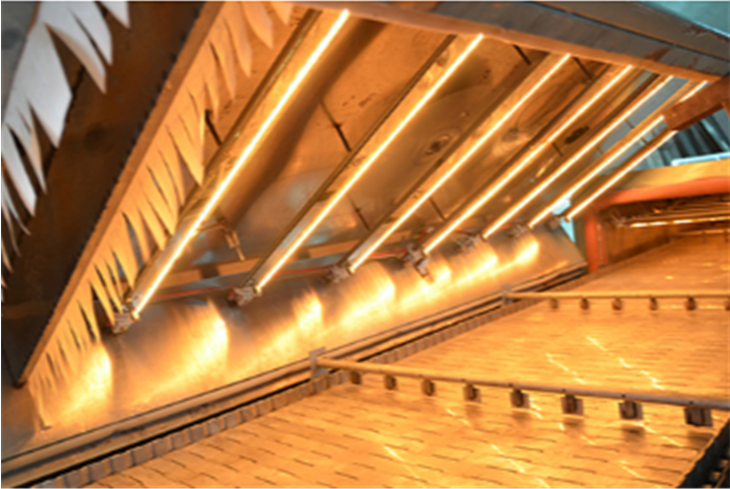
Most bakery disasters come down to one thing: temperature swings. It sounds minor, but a few degrees of difference between your top and bottom racks is the difference between a perfect loaf and something with a collapsed center or uneven browning. It’s frustrating. You did everything right with the dough, but the oven let you down. To fix this, we use nichrome-based halogen bulbs in our high-end designs. Now, these aren’t like those old-school heating elements that take forever to warm up. Halogen lamps use shortwave radiation. In plain English? They hit the dough with heat almost instantly.
How it actually works
Inside the bulb, there’s a tungsten filament sitting in a halogen gas environment. The gas keeps the filament from wearing thin too quickly, so the bulbs actually last. But the real magic is that they don’t bother heating up the air first. They go straight for the surface of the dough. This makes the oven incredibly responsive. If you open the door and the sensor catches a 2-degree drop, the halogen element kicks in and recovers that heat in seconds. It’s fast. Really fast. And that changes everything for your workflow.
The balancing act
Of course, you can’t just throw a high-wattage bulb in a box and call it a day. You have to be careful not to “overshoot” the temperature. Because these bulbs create such an intense concentration of heat, you need the right airflow. If your convection fans aren’t up to the task, you’ll end up with those annoying hot spots—where the crust is charred black but the middle is still raw. It’s all about the balance.
Stop fighting your equipment
If you’re just starting out, you’ve probably dealt with “oven hot spots.” Most cheap ovens have huge temperature swings—sometimes as much as 15°C. That’s a nightmare. You spend more time guessing and praying than actually baking. When you tighten that window to +/- 1°C, the guesswork vanishes. You stop worrying about whether the oven is lying to you and you can finally just focus on your recipe. Less wasted dough, fewer ruined batches, and a lot less stress on the shop floor. That’s the goal.